The Retina of Vertebrates: Santiago Ramón y Cajal’s Timeless Legacy
An Exhibition Celebrating the Origins of Modern Visual Neuroscience
The Retina of Vertebrates exhibition celebrates the extraordinary scientific and artistic legacy of Santiago Ramón y Cajal, the father of modern neuroscience. Presented during the ISER International Congress, the exhibition offers visitors a unique opportunity to discover how Cajal’s pioneering studies of the retina transformed our understanding of the nervous system and provided decisive evidence for the Neuron Doctrine, work that earned him the Nobel Prize in Physiology or Medicine in 1906.
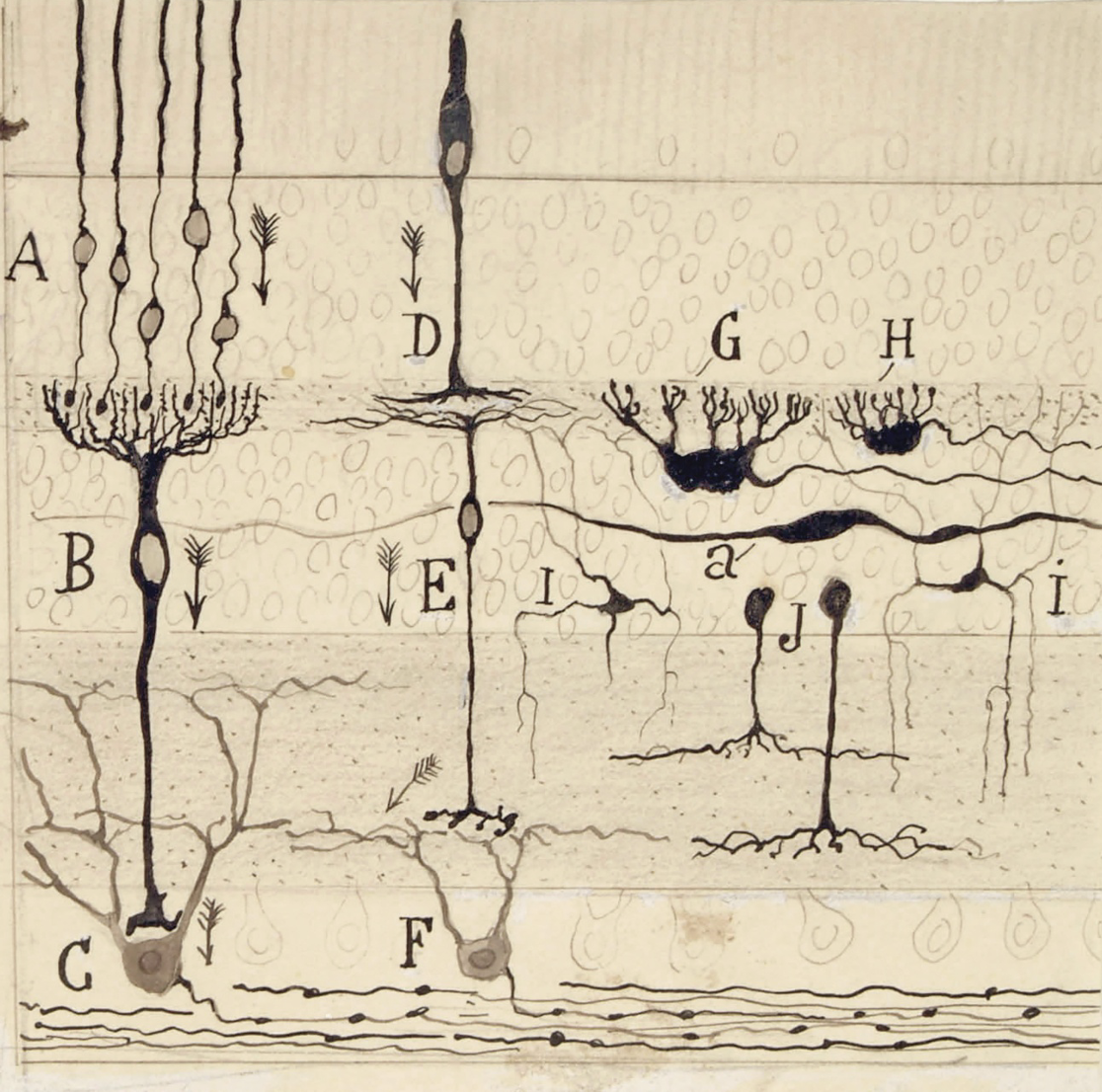
More than 130 years after the publication of The Retina of Vertebrates, Cajal’s discoveries continue to inspire neuroscientists, ophthalmologists, and vision researchers worldwide. The exhibition features high-quality reproductions of his original drawings, renowned for their exceptional anatomical precision and artistic beauty, alongside spectacular three-dimensional confocal microscopy images of vertebrate retinas. Together, these historical and contemporary images reveal the remarkable accuracy of Cajal’s observations and illustrate the enduring relevance of his work to modern vision science.
Visitors will explore the organization of retinal circuits, the diversity of retinal neurons, and the structural basis of visual processing that Cajal first described with extraordinary insight. The exhibition highlights the fascinating dialogue between nineteenth-century scientific illustration and twenty-first-century imaging technologies, demonstrating how modern microscopy continues to confirm and expand upon Cajal’s pioneering discoveries.
The exhibition also celebrates the publication of the new English edition of The Retina of Vertebrates, making this classic work available once again to the international scientific community. The volume combines Cajal’s original text and illustrations with previously unpublished photographs of his original preparations and modern retinal images, offering a unique perspective on the evolution of retinal research.
We warmly invite all ISER participants to visit this exhibition and rediscover the scientific vision, artistic talent, and enduring legacy of Santiago Ramón y Cajal, whose beloved retina continues to inspire generations of vision scientists around the world.