
What to do in Valencia?
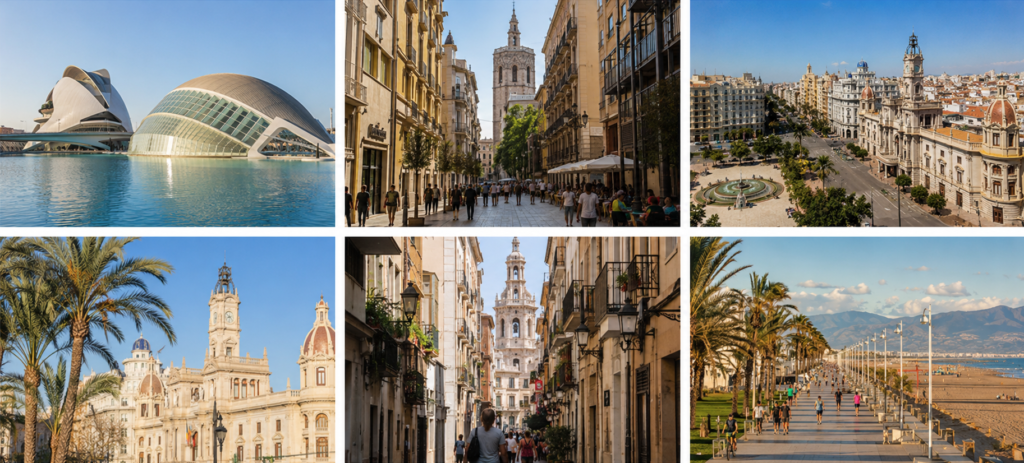
Valencia is unlike any other city on Spain’s Mediterranean coast. The combination of a 2,000-year-old historic centre and Santiago Calatrava’s futuristic City of Arts and Sciences makes the Valencian capital stand out. From the Gothic Silk Exchange to the paella born in the rice fields just outside the city, Valencia offers a singular cultural experience. And if that’s not enough to convince you to come, you will find more reasons to visit this vibrant city. Find out more under the button below!
The City of Valencia
Valencia is the capital of the Valencian Community and Spain’s third-largest city, sitting on the Mediterranean coast where the (diverted) Turia river once flowed into the sea. Founded by the Romans in 138 BC, it blends a dense Gothic old town, home to the Cathedral, the Lonja de la Seda silk exchange and the Central Market, with the striking City of Arts and Sciences, a complex of futuristic buildings by architect Santiago Calatrava built along the old riverbed. Its city beaches, Malvarrossa and Patacona, are a short tram ride from the historic centre, and the Palacio de Congresos, host venue for ISER 2026, sits close to both.
Gastronomy
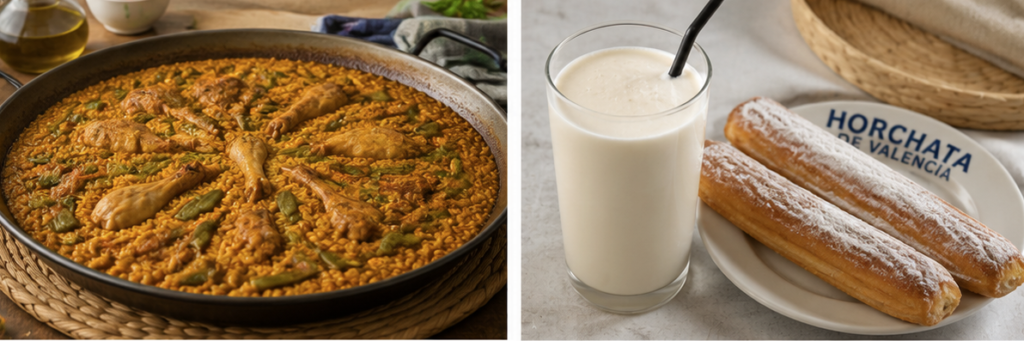
Valencia is the birthplace of paella, traditionally cooked with rabbit, chicken, snails and flat green beans rather than seafood, and best eaten at lunchtime as locals do. Pair it with horchata, a sweet drink made from tiger nuts, and fartons, a soft pastry made for dipping — both originated in the nearby town of Alboraya.
Weather in the City
August is high summer in Valencia, with average daytime temperatures around 30°C (86°F) and warm evenings well suited to outdoor terraces. Rain is rare at this time of year, and the sea breeze along the promenade keeps the coast a few degrees cooler than the city centre. Light, breathable clothing and sun protection are recommended for delegates spending time outdoors between sessions.
Things to do
The attractions of Valencia bring something for every kind of traveller. From the interactive science museum and Europe’s largest aquarium to a Gothic old town and quiet rice paddies just outside the city, a stay in Valencia offers a full spectrum of culture, food and coastline — from dazzling modern architecture to small, atmospheric neighbourhood markets.
- City of Arts and Sciences — L’Oceanogràfic aquarium, the Hemisfèric planetarium and IMAX, and the Príncipe Felipe science museum.
- Historic centre — the Cathedral, the Lonja de la Seda (UNESCO World Heritage Site), and the Torres de Serranos.
- Mercado Central — one of Europe’s oldest working produce markets, housed in a modernist iron-and-glass building.
- Turia Gardens — a 9km park built in the old riverbed, ideal for walking or cycling between the old town and the beach.
- Malvarrossa & Patacona beaches — city beaches with a long, palm-lined promenade of paella restaurants.
- Albufera Natural Park — a freshwater lagoon and rice paddies just outside the city, best seen by boat at sunset.
VALENCIA. LIFE DONE BETTER!
You are currently viewing a placeholder content from YouTube. To access the actual content, click the button below. Please note that doing so will share data with third-party providers.
More Information